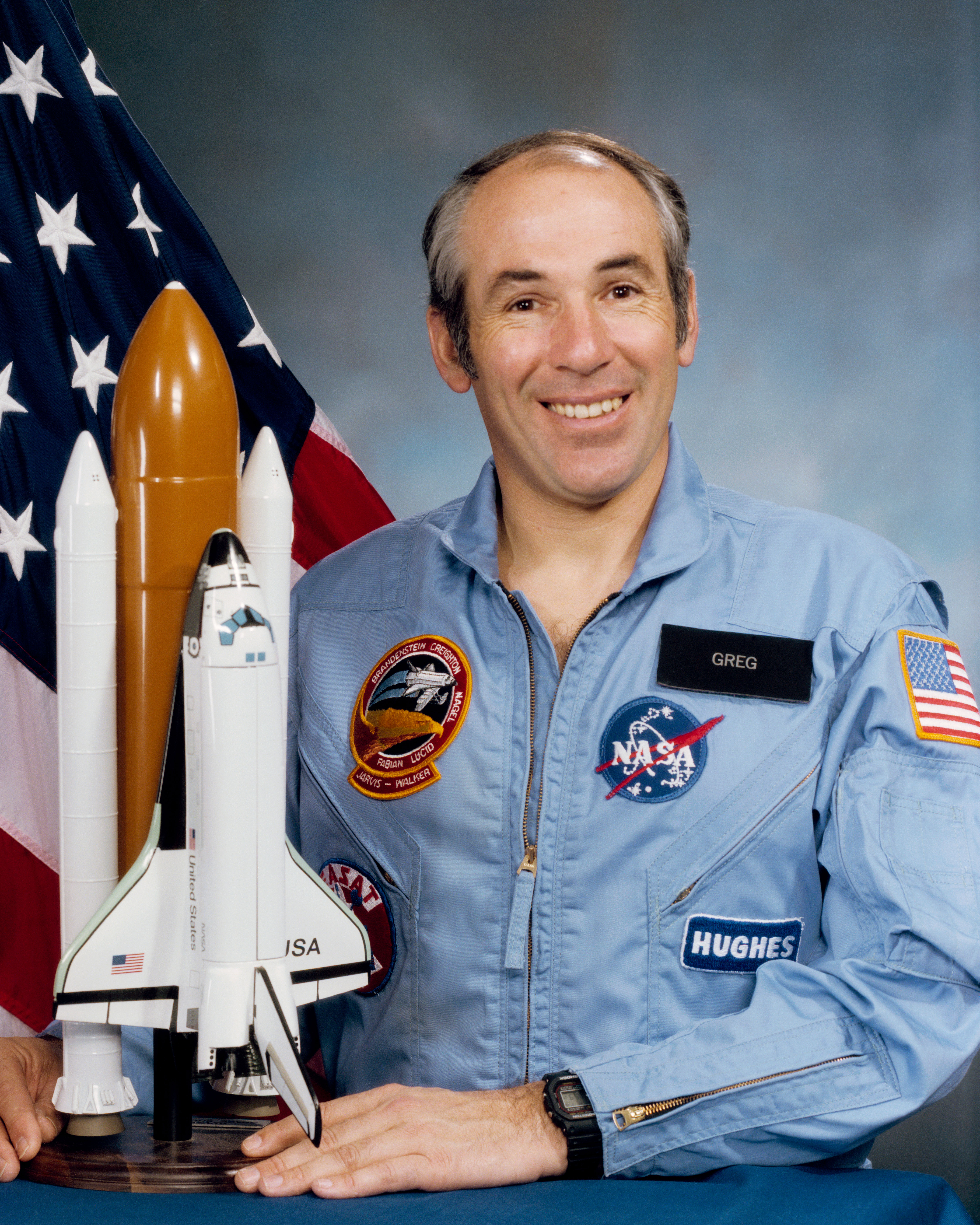
Gregory Bruce Jarvis
Gregory Bruce Jarvis was an American electrical engineer, former Air Force officer, Hughes Aircraft spacecraft engineer, and assigned to STS-51-L. He represented the shuttle program's industry payload-specialist path, in which engineers connected to major spacecraft and satellite programs trained to fly with the hardware they helped support.
- Born
- August 24, 1944
- Died
- January 28, 1986
- Birthplace
- Detroit, Michigan,United States
Flights
1
Spacewalks
0
EVA time
N/A
In space
1 minute, 13 seconds
Bio
Jarvis was born in Detroit and grew up in Mohawk, New York. He studied electrical engineering at the State University of New York at Buffalo and Northeastern University, then entered active duty with the United States Air Force in 1969. His early work centered on satellite communications, including payload engineering for advanced tactical communications satellites.
After leaving active duty in 1973 as an Air Force captain, Jarvis joined Hughes Aircraft Company's Space and Communications group. He worked on MARISAT, advanced UHF and SHF communications concepts, and the SYNCOM IV/LEASAT program, moving through subsystem engineering, test, integration, and spacecraft bus system roles before being selected as a Hughes payload specialist candidate.
Jarvis was assigned to STS-51-L as a payload specialist. The Challenger mission was planned to deploy TDRS-B, carry SPARTAN-203 for Halley's Comet observations, support student experiments, and include the Teacher in Space Project. Challenger broke apart shortly after launch on January 28, 1986, killing Jarvis and the six other crew members.
His career belongs to both astronaut history and satellite engineering history. Jarvis's career shows how the shuttle program tried to bring specialized industry expertise directly into orbit, and his loss made him part of the Challenger legacy remembered across engineering, education, and public spaceflight memorials.