Fluids Experiment Apparatus
Reconfigurable crew-operated microgravity laboratory
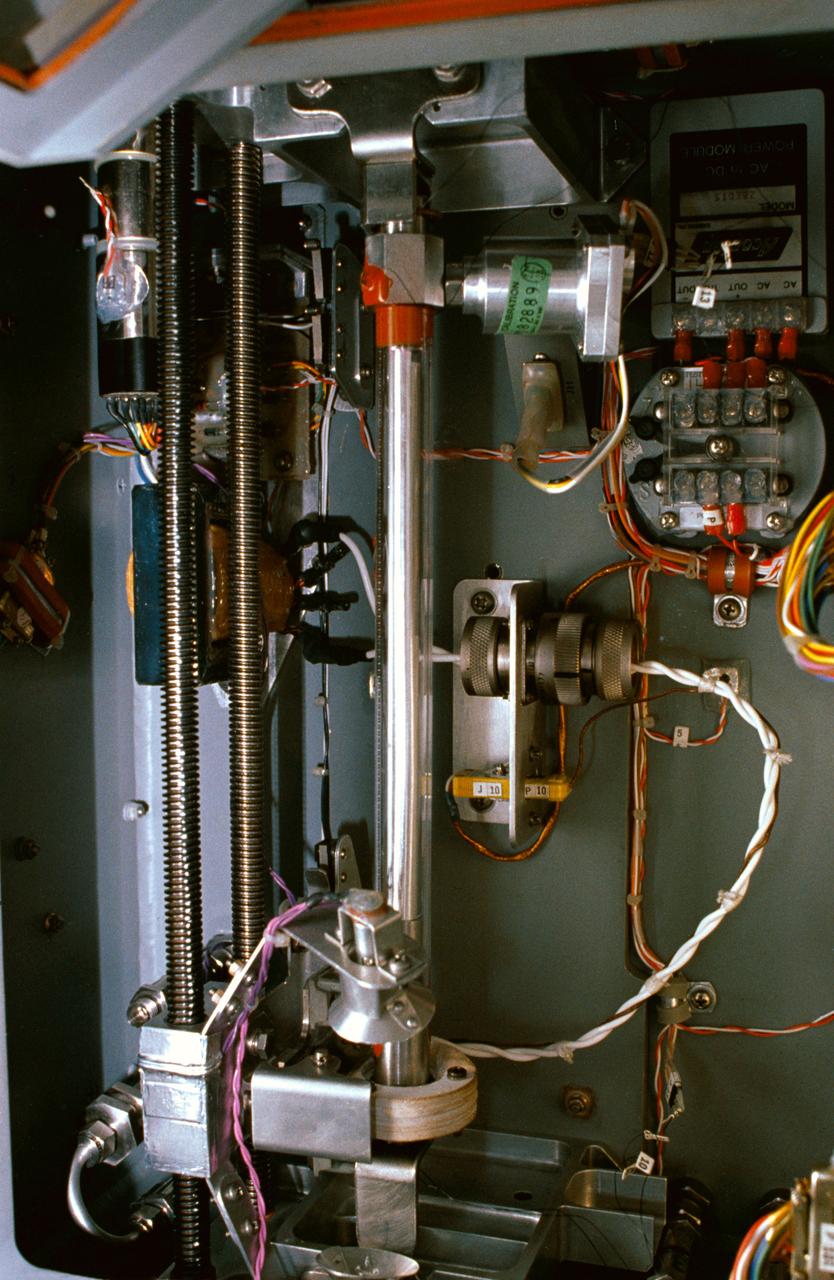
The Fluids Experiment Apparatus was a reusable, locker-size chemistry and physics laboratory developed by Rockwell International for crew-tended Space Shuttle research. Its reconfigurable chamber could heat, cool, mix, stir, centrifuge, image, and instrument solid, liquid, or gaseous samples. After an early student-experiment flight on STS-41-D, FEA supported semiconductor crystal work on STS-30 and STS-32 and a later liquid-encapsulated melt-zone configuration in SPACEHAB on STS-57.
Parent systems
The larger spacecraft or system this hardware belongs to.
Payload dossier
Identity and integration
- Official hardware designation and manufacturer
- Fluids Experiment Apparatus (FEA), developed and integrated by Rockwell International Space Transportation Systems Division
- Crew-compartment integration
- Installed in place of a standard Shuttle middeck stowage locker and operated by a flight crewmember
- STS-30 sample configuration
- Three indium and two selenium rods, each 1 centimeter in diameter and 19 centimeters long, processed by a translating annular heater
- Reconfiguration and subsystem options
- Could be reconfigured in orbit with custom furnaces, ovens, sample containers, low-temperature air heaters, a specimen centrifuge, and experiment-specific instrumentation
- Final documented Shuttle configuration
- STS-57 used FEA hardware for the Liquid Encapsulated Melt Zone experiment inside the SPACEHAB laboratory
Research configuration
- Laboratory function and experiment range
- Modular zero-gravity chemistry and physics laboratory for liquid chemistry, crystal growth, fluid mechanics, thermodynamics, and cell-culture investigations
- Interior laboratory dimensions
- Approximately 18.6 by 14.5 by 7.4 inches
- Experiment-hardware mass capacity
- Approximately 40 pounds of experiment-unique hardware and subsystems in the STS-32 reference configuration
- Instrument and imaging accommodation
- Supported temperature, pressure, and viscosity instrumentation plus video or Super-8 film recording of sample behavior
Resources and accommodations
- Electrical-power accommodation
- Up to 100 watts of 120-volt, 400-hertz power for installed experiments
- Control and data interface
- A portable computer could control the experiment while displaying and recording heater, position, timing, and temperature data
Dimensions and construction
- Sample-access door dimensions
- 14.1 by 10 inches, permitting multiple samples to be installed, exchanged, or removed in orbit
Flight operations and results
- First documented flight operation
- STS-41-D carried FEA as a student experiment before the NASA-Rockwell joint-endeavor crystal-growth flights
- Joint-endeavor mission operations
- STS-30 processed indium and selenium; STS-32 used the apparatus for indium crystal growth and the Microgravity Disturbance Experiment
Additional specifications
- Sample-processing capability
- Could heat, cool, mix, stir, or centrifuge gaseous, liquid, and solid samples in containers or a semicontainerless floating-zone mode
- Floating-zone performance method
- The annular heater translated along a sample to melt a short zone and resolidify it behind a seed crystal, enabling crystal growth and impurity segregation without a supporting crucible
Supported mission records
Missions that carried, used, tested, serviced, or depended on this hardware.
Photo Archive
Documented views of this individual vehicle, with source and credit retained alongside each image.