Courses / Canadian space technology: services, robotics and student missions Space programs and missions · A guided course
Canadian space technology: services, robotics and student missions Turn technical ideas into verified services and student missions.
Explore Canadian robotics development, quantum communication experiments, mobile and broadcast satellite services, maritime monitoring and student CubeSat initiatives. Learn how evidence connects designs, teams, operating systems and practical results.
Start learning Suggested preparation is listed in the course · Start whenever you’re ready
Read learner reviews ↓
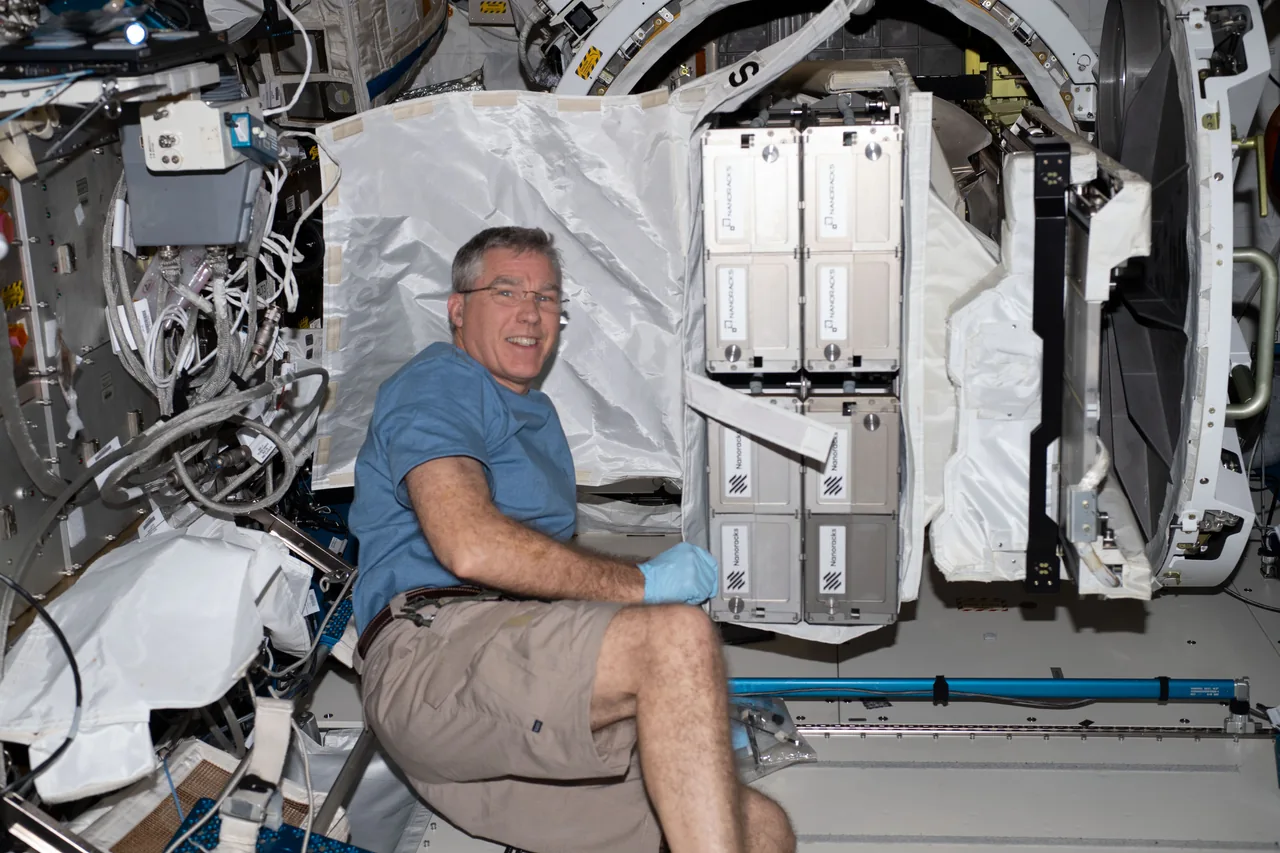
NASA / Frank Rubio · Image source Your place in the bigger picture
How this course connects Build on familiar ideas, then choose a direction to explore next. Every course remains open.
Explore other learning paths → 02 You are here Canadian space technology: services, robotics and student missions
Turn technical ideas into verified services and student missions.
7 lessons · 56 min Loading progress…
Start whenever you’re ready. Preparation is suggested, and every course stays open.
03 Next directionsChoose another direction No follow-on course currently lists this one as preparation. Explore another subject or revisit an idea that caught your interest.
Browse all courses → Trace the full preparation path 18 courses One suggested order from the foundations to Canadian space technology: services, robotics and student missions. Shared starting points appear once; skip anything you already know.
Loading progress… Loading progress… Loading progress… Loading progress… Loading progress… Loading progress… Loading progress… Loading progress… Loading progress… Loading progress… Loading progress… Loading progress… Loading progress… Loading progress… Loading progress… Loading progress… Loading progress… Loading progress… Then: Canadian space technology: services, robotics and student missions →
Correct answer +10
Lesson complete +25
All lessons complete +100
Final challenge +50 Earn each reward once. Retries never cost points.
Loading saved points… View your learning awards →
Inside this course 7 lessons Each lesson builds on the last. Read the story, explore the sources, and check your understanding.
0 of 7 lessons complete
— / 585 points Earned in this course
01 Canadarm3 Canadarm3: follow a robotic design through a changing exploration plan Explain the original Canadarm3 concept, the August 2026 change in direction, and the evidence needed to transfer technology into a new mission. 8 min · Read · Practice 02 QEYSSat QEYSSat: test quantum keys without promising perfect security Distinguish quantum key distribution from message transmission and identify the engineering assumptions in a satellite demonstration. 8 min · Read · Practice 03 MSAT MSAT: connect a mobile user to a complete satellite service Explain MSAT’s mobile-communications purpose and distinguish satellite capability, authorized use and an achieved user connection. 8 min · Read · Practice 04 Nimiq Nimiq: turn satellite capacity into television service Explain the Nimiq direct-broadcast family and distinguish launch, commissioning, leased capacity and a viewer’s delivered service. 8 min · Read · Practice 05 M3MSat M3MSat: combine ship messages with independent observations Explain M3MSat’s technology demonstrations and evaluate an AIS/radar comparison without treating a missing message as proof of intent. 8 min · Read · Practice 06 Canadian CubeSat Project Canadian CubeSat Project: learn the whole mission by building one Explain how the Canadian CubeSat Project connected student education with flight hardware, scientific objectives and operations. 8 min · Read · Practice 07 CUBICS CUBICS: grow capability across teams and mission generations Explain how CUBICS extends student satellite development and evaluate a mission plan using interfaces, resources and achievable objectives. 8 min · Read · Practice Put it all together Canadian space technology: services, robotics and student missions challenge 5 questions · 8 min · Final review Where this course fits → No account is needed to learn. Your correct answers keep their earned rewards.
What you’ll understand Distinguish development intentions from verified mission outcomes Trace communications and observation systems from hardware to useful results Evaluate student missions using interfaces, resource budgets and evidence Take one lesson at a time. Study the evidence, work through a question, and check your understanding along the way. A final challenge connects ideas across all 7 lessons. Follow the source links whenever you want to go further.
Browse the archive → Loading reviews…
Sign in to review this course . Complete a lesson check and save it to your account first.
Show reviews in All languages English Español / Spanish Français / French Deutsch / German Português / Portuguese 中文 / Chinese 日本語 / Japanese 한국어 / Korean Русский / Russian العربية / Arabic हिन्दी / Hindi Other / not specified Languages are chosen by reviewers. Ratings above include all languages.