Courses / The Galileo navigation program Space programs and missions · A guided course
The Galileo navigation program European positioning, precise time and trusted navigation data
Trace Galileo from civilian program goals and first position fixes to timing-based positioning, ground operations, high-accuracy corrections, authentication and rescue feedback.
Start learning Suggested preparation is listed in the course · Start whenever you’re ready
Read learner reviews ↓
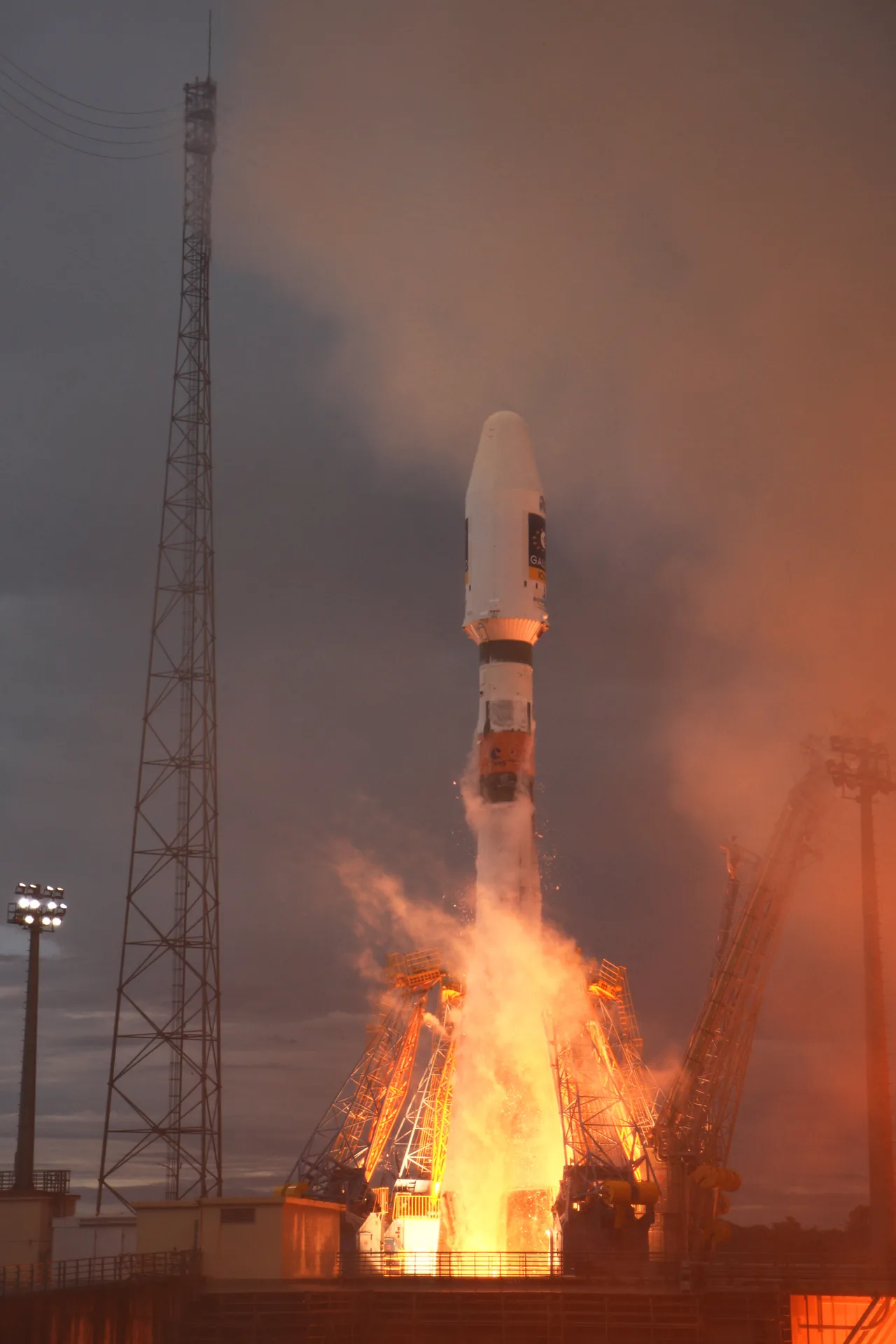
Soyuz VS01 launches the first Galileo in-orbit validation pair on October 21, 2011. The launch precedes the first Galileo-only position fix and the Initial Services declaration. Display image resized and compressed.
Thilo Kranz/DLR · Image source Your place in the bigger picture
How this course connects Build on familiar ideas, then choose a direction to explore next. Every course remains open.
Explore other learning paths → 02 You are here The Galileo navigation program
European positioning, precise time and trusted navigation data
4 lessons · 24 min Loading progress…
Start whenever you’re ready. Preparation is suggested, and every course stays open.
03 Next directionsChoose another direction No follow-on course currently lists this one as preparation. Explore another subject or revisit an idea that caught your interest.
Browse all courses → Trace the full preparation path 13 courses One suggested order from the foundations to The Galileo navigation program. Shared starting points appear once; skip anything you already know.
Loading progress… Loading progress… Loading progress… Loading progress… Loading progress… Loading progress… Loading progress… Loading progress… Loading progress… Loading progress… Loading progress… Loading progress… Loading progress… Then: The Galileo navigation program →
Correct answer +10
Lesson complete +25
All lessons complete +100
Final challenge +50 Earn each reward once. Retries never cost points.
Loading saved points… View your learning awards →
Inside this course 4 lessons Each lesson builds on the last. Read the story, explore the sources, and check your understanding.
0 of 4 lessons complete
— / 420 points Earned in this course
01 A civilian navigation program A civilian navigation program Explain Galileo’s purpose, institutional responsibilities and distinct development milestones. 6 min · Read · Practice 02 Clocks, ranges and four unknowns Clocks, ranges and four unknowns Explain how signal timing constrains position and why receiver clock error must be solved too. 6 min · Read · Practice 03 Space, ground and the user receiver Space, ground and the user receiver Trace a navigation service through monitoring, broadcast data and receiver processing. 6 min · Read · Practice 04 Accuracy, authentication and rescue services Accuracy, authentication and rescue services Distinguish Galileo service improvements by the specific problem each addresses. 6 min · Read · Practice Put it all together Connect Galileo’s signals and services 5 questions · 8 min · Final review Where this course fits → No account is needed to learn. Your correct answers keep their earned rewards.
What you’ll understand Explain Galileo’s purpose, institutional responsibilities and distinct development milestones. Explain how signal timing constrains position and why receiver clock error must be solved too. Trace a navigation service through monitoring, broadcast data and receiver processing. Distinguish Galileo service improvements by the specific problem each addresses. Take one lesson at a time. Study the evidence, work through a question, and check your understanding along the way. A final challenge connects ideas across all 4 lessons. Follow the source links whenever you want to go further.
Explore the first Galileo validation spacecraft → Loading reviews…
Sign in to review this course . Complete a lesson check and save it to your account first.
Show reviews in All languages English Español / Spanish Français / French Deutsch / German Português / Portuguese 中文 / Chinese 日本語 / Japanese 한국어 / Korean Русский / Russian العربية / Arabic हिन्दी / Hindi Other / not specified Languages are chosen by reviewers. Ratings above include all languages.