
AstronautAtlas
Learn the story of spaceflightLoading AstronautAtlas records
AstronautAtlas
Learn the story of spaceflightLoading AstronautAtlas records
Space programs and missions · A guided course
Deliver supplies, handle external cargo and return a small sample
Explore the original HTV cargo program through compartment planning, robotic berthing, station hardware transfers and the evidence behind its small-capsule demonstration.
Suggested preparation is listed in the course · Start whenever you’re ready
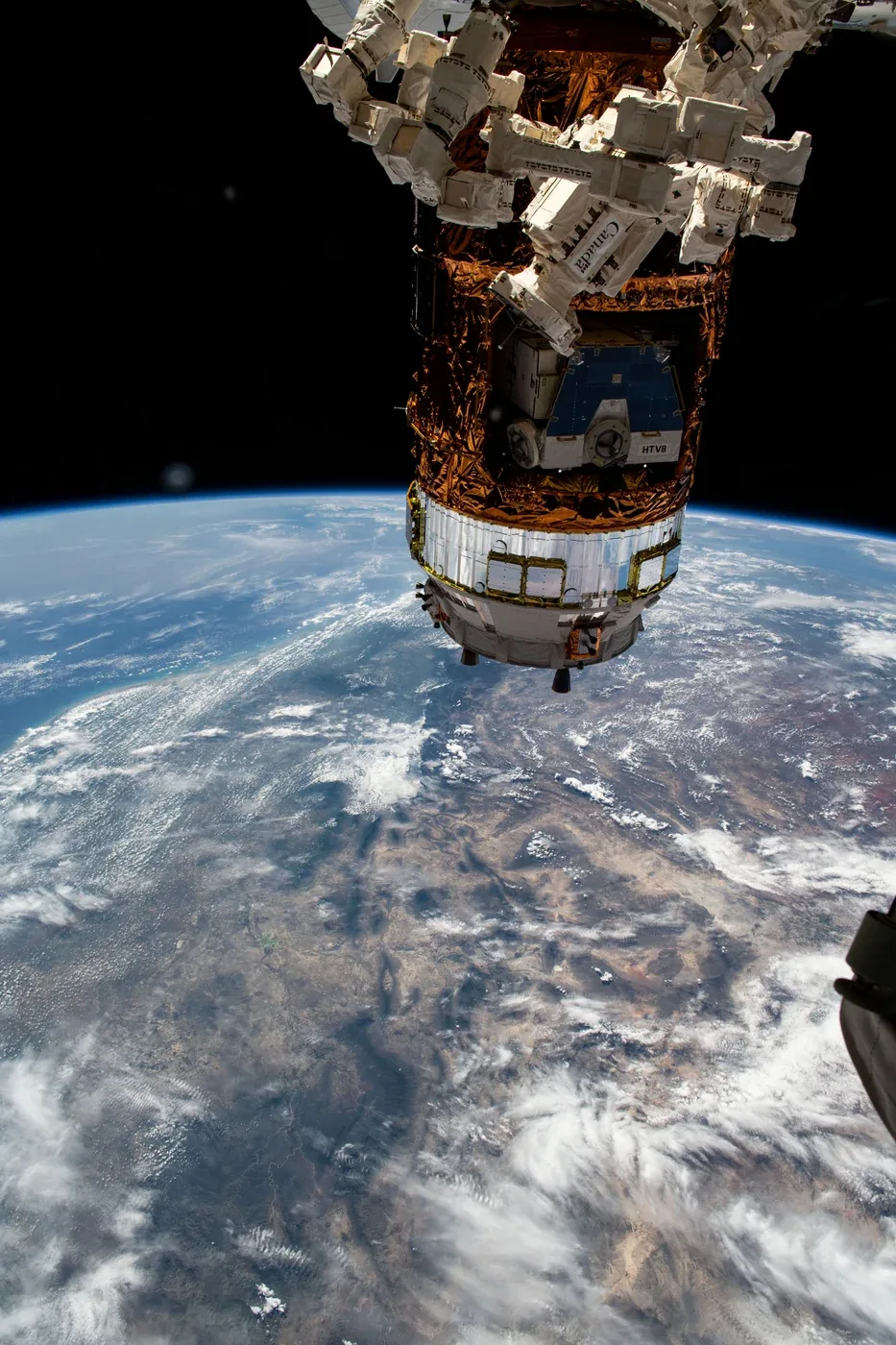
NASA’s June 30, 2020 view shows HTV-9 behind Dextre. The HTV8 label belongs to an earlier pallet carrying removed nickel-hydrogen batteries inside HTV-9. Source image iss063e040012. Credit: NASA/JSC. Complete frame retained; no Atlas crop or enhancement.
NASA / JSC · Image source · NASA media usage guidelinesYour place in the bigger picture
Build on familiar ideas, then choose a direction to explore next. Every course remains open.
Building and sustaining a shared orbital laboratory
Connect research facilities with orbital deliveries
Japan’s HTV Kounotori program
Deliver supplies, handle external cargo and return a small sample
Start whenever you’re ready. Preparation is suggested, and every course stays open.
Resupply the station, then turn free flight into a test platform
One suggested order from the foundations to Japan’s HTV Kounotori program. Shared starting points appear once; skip anything you already know.
— earned
Earn each reward once. Retries never cost points.
Loading saved points… View your learning awards →
Each lesson builds on the last. Read the story, explore the sources, and check your understanding.
0 of 4 lessons complete
No account is needed to learn. Your correct answers keep their earned rewards.
From the learning community
What worked for you? Help the next learner choose where to begin.
Loading reviews…
Sign in to review this course. Complete a lesson check and save it to your account first.
Languages are chosen by reviewers. Ratings above include all languages.